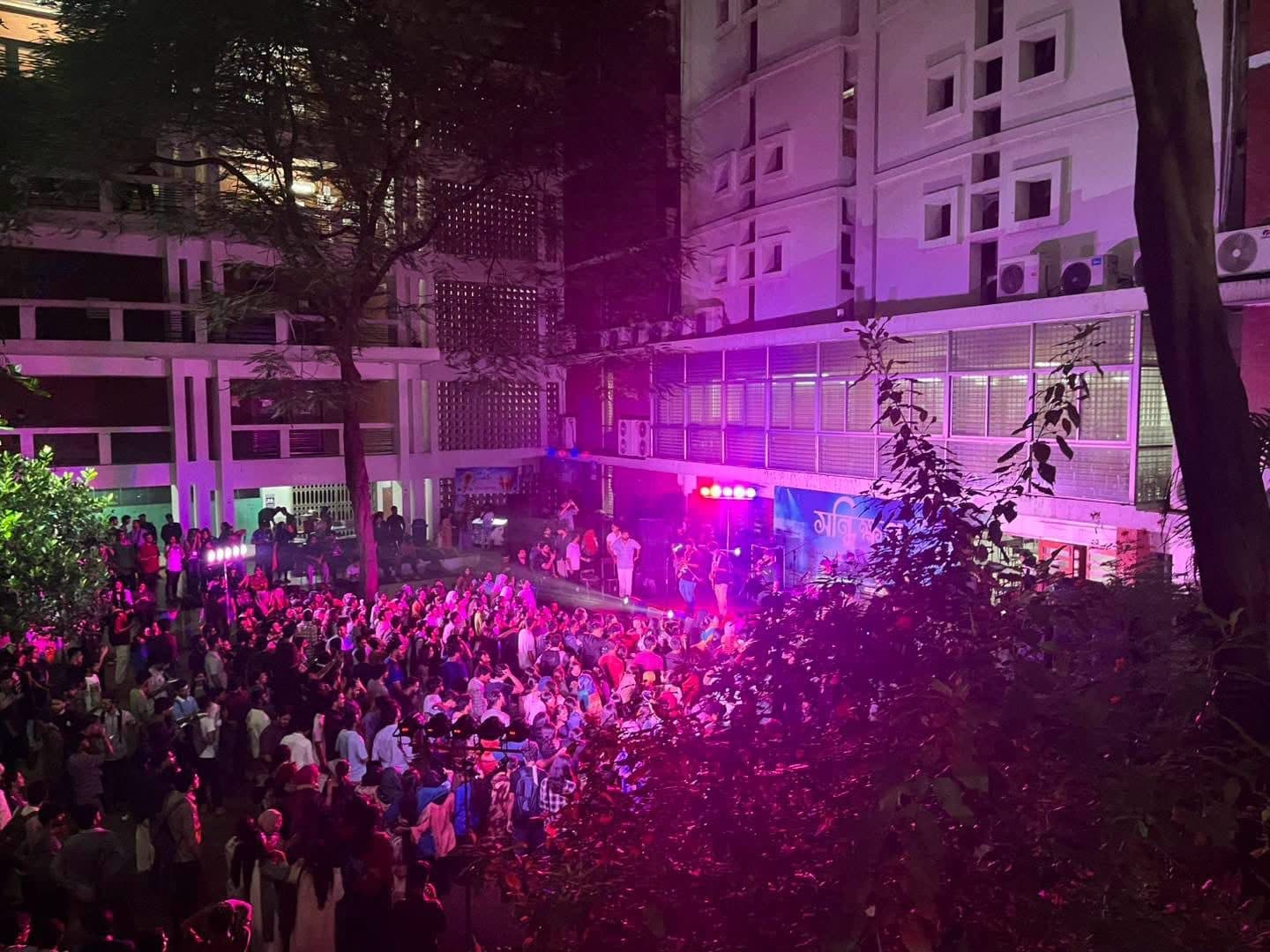
A university education is about more than attending lectures, completing assignments, and earning a degree. It is also about developing the knowledge, practical abilities, and professional qualities needed to succeed in the real world.
At Ahsanullah University of Science and Technology (AUST), students have opportunities to explore learning beyond traditional classrooms through laboratory activities, industrial visits, academic projects, research initiatives, professional societies, and extracurricular involvement.
AUST provides an academic environment where students from different disciplines can develop their interests, strengthen their abilities, and prepare for future professional challenges.
1. Practical Learning: Connecting Theory with Reality
One of the most important aspects of professional development is the ability to apply theoretical knowledge in practical situations. AUST provides specialized laboratory facilities across its academic departments to support hands-on learning, experimentation, and technical skill development.
Some of the major laboratory facilities include:
Department of Mechanical and Production Engineering (MPE) – Serving both IPE and ME students:
Machine Shop and Sheet Metal Lab
Ergonomics and Material Handling Lab
Simulation Lab
Thermodynamics and Heat Engine Labs
Fluid Mechanics and Machinery Lab
Applied Mechanics and Materials Lab
Theory of Machines Lab
Metallurgy and Heat Treatment Lab
Measurement, Instrumentation and Control Lab
Computer Integrated Manufacturing (CIM) Lab
Department of Computer Science and Engineering (CSE):
Department of Electrical and Electronic Engineering (EEE):
Circuit and Electronics Labs
Electrical Machine Lab
Digital and Microprocessor Lab
Simulation Lab
Digital Signal Processing Lab
Telecommunications Lab
Control System and Biomedical Instrumentation Lab
Power Electronics Lab
VLSI Lab
Microwave and Optical Communication Lab
Department of Civil Engineering (CE):
Concrete Lab
Strength of Materials Lab
Transportation Engineering Lab
Hydraulics and Fluid Mechanics Lab
Geotechnical Lab
Environmental Engineering Lab
Surveying Lab
Department of Textile Engineering (TE):
Yarn Manufacturing Lab
Fabric Manufacturing Labs (Weaving and Knitting)
Wet Processing Labs
Apparel Manufacturing Lab
Textile Testing and Quality Control Lab
Fabric Structure and Design Lab
Department of Architecture:
Design Studio
Building Materials Lab
Environmental Lab
Computer-Aided Design Lab
Model Making Lab
The Department of Arts and Sciences also provides Physics, Chemistry, and English Language Laboratories, while the School of Business has a Digital Computer Lab.
These facilities help students understand practical applications of their academic subjects and gain technical experience relevant to their respective fields.
2. Industrial and Factory Visits: Experiencing the Professional World Firsthand
Classroom learning becomes more meaningful when students get the opportunity to observe how industries operate in real life. Industrial visits and factory tours allow students to explore manufacturing processes, production systems, quality control, supply chain operations, workplace safety, and industrial management.
AUST regularly documents industrial and educational visits organized by its academic departments and student organizations. Some notable examples include:
Akij Cement Company Ltd. and Akij Poly Fibre Industries Ltd. (2026):Organized by IEOM Society AUST Student Chapter, this visit provided IPE students with exposure to large-scale manufacturing, cement production, raw-material handling, and industrial operations.
Walton Hi-Tech Industries PLC (2026): Organized by the EEE Department in collaboration with IEEE AUST Student Branch, students observed manufacturing, assembly, and testing processes for refrigerators and air conditioners.
PRAN Industrial Park (2026): The School of Business arranged a field visit for BBA students, offering insights into production, quality management, logistics, supply chain coordination, and business operations.
Augmedix (2026): CSE students visited the health-tech company to understand how artificial intelligence and real-time data processing are applied in healthcare.
4A Yarn Manufacturing Company Ltd. (2022): IPE students visited the production floors to observe yarn manufacturing and industrial operations.
These are some examples of the industrial exposure documented by AUST.
Beyond factory visits, students also participate in educational study tours to infrastructure and industrial facilities, including the Padma Bridge Rail Link Project, Jamuna Bridge Railway Project, Ashuganj Power Station, and other significant sites.
Such experiences help students connect academic concepts with actual workplace practices. They also provide valuable insights into different career paths and the expectations of professional industries.
3. Research, Innovation, Career Development and Extracurricular Opportunities
Research and innovation encourage students to think critically, investigate problems, and develop creative solutions. At AUST, different student organizations and professional societies contribute to this learning environment through research initiatives, technical activities, workshops, competitions, and career-oriented programs.
University clubs:
- AUST Debating Club (AUSTDC): Develops public speaking, critical thinking, argumentation, and communication skills through debates and discussion sessions.
- AUST Photography Club (AUSTPC): Encourages visual creativity and photography skills through photography activities, competitions, and exhibitions.
- AUST Innovation and Design Club (AUSTIDC): Encourages innovation and practical problem-solving through projects and activities related to robotics, programming, automobile design, CAD, and technology.
- AUST Cultural Club (AUSTCC): Provides a platform for students to showcase their talents through cultural performances, celebrations, and creative events.
- AUST Blood Donation Club (AUSTBDC): Promotes voluntary blood donation and helps connect donors with people in need.
- AUST Sports Club (AUSTSC): Encourages physical fitness, teamwork, and sportsmanship through games and tournaments.
- AUST Career Development Club (AUSTCDC): Supports career preparation through career seminars, workshops, professional development programs, and competitions.
- AUST Programming and Informatics Club (AUSTPIC): Encourages programming, computational thinking, and problem-solving through coding-related activities and competitions.
- AUST Robotics Club (AUSTRC): Develops students' practical knowledge of robotics and automation through technical workshops, projects, and competitions.
- AUST Environmental and Social Welfare Club (AUSTESWC): Promotes environmental awareness, social responsibility, volunteering, and community service.
- AUST Research and Publication Club (AUSTRPC): Encourages research, academic writing, publication, and knowledge sharing through research-based activities and symposiums.
- AUST Ahsanullah (R.) Peace Club (AUSTARPC): Promotes peace, harmony, mutual understanding, and social awareness among students.
Societies and professional chapters:
- AUST IPE Society: Represents Industrial and Production Engineering students and organizes academic, cultural, networking, and professional activities that strengthen connections among students, faculty, and industry.
- IEOM Society AUST Student Chapter: Promotes Industrial Engineering and Operations Management through industrial visits, research symposiums, technical workshops, career talks, and business and design competitions.
-AUST Mechanical Engineering Association: Provides a platform for Mechanical Engineering students to participate in departmental activities and build connections with fellow students.
- AIAA AUST Student Branch (American Institute of Aeronautics and Astronautics):Introduces students to aerospace and aeronautical engineering through technical learning and professional engagement.
- IMechE AUST Student Chapter (Institution of Mechanical Engineers): Promotes mechanical engineering knowledge, innovation, and professional development through engineering-focused activities.
- ASME AUST Student Chapter (American Society of Mechanical Engineers): Encourages practical engineering knowledge, technical skills, and professional connections in mechanical engineering.
- ASHRAE AUST Student Branch (American Society of Heating, Refrigerating and Air-Conditioning Engineers): Develops knowledge of heating, ventilation, air conditioning, refrigeration, energy efficiency, and sustainable building technologies.
- IEEE AUST Student Branch (Institute of Electrical and Electronics Engineers): Connects students with the wider engineering and technology community through technical workshops, seminars, projects, competitions, and professional networking.
- AUST Textile Society: Represents Textile Engineering students and arranges academic, cultural, social, and co-curricular activities, including seminars, competitions, and student events.
- AATCC AUST Student Chapter (American Association of Textile Chemists and Colorists): Provides exposure to textile chemistry, coloration, wet processing, textile testing, and quality-related knowledge through professional and technical activities.
4. Competitions and Learning Opportunities
AUST clubs and professional societies organize various competitions, workshops, seminars, and educational events throughout the academic year. Some documented examples include:
Excel Your Way 2.0: An IEOM Society AUST Student Chapter initiative featuring an industry-led Microsoft Excel workshop followed by a practical competition.
Research Symposium: An academic platform encouraging students to explore research and present their ideas.
Career Symposium: Organized by AUSTCDC, bringing students and companies together through career discussions, networking, and recruitment opportunities.
RESOLUTE: An intra-university case competition organized by AUSTCDC to develop strategic thinking and problem-solving.
Checkmate: A national business case competition that encourages analytical and business-oriented thinking.
IEB Project Showcasing Competition: A platform where AUST students have demonstrated their engineering projects and achievements.
Through these activities, students gain opportunities to share knowledge, test their abilities, learn from industry professionals, and interact with students from different academic backgrounds.
5. Connecting Academic Learning with Industry
Understanding industry requirements is an important part of preparing for professional life.
AUST’s Center for Extension Services (CES) works as a platform connecting academic expertise with industries and other organizations. Its activities include research, consultancy, technical testing, professional training, and industry collaboration. Such initiatives help connect academic knowledge with practical industrial challenges and encourage collaboration between universities and industries.
6. Preparing for Life Beyond Graduation
Professional development begins long before graduation. Students can use their university years to build a strong foundation for their future careers.
Some important steps include:
Participating in internships and relevant training.
Building professional CVs and LinkedIn profiles.
Taking part in competitions and academic events.
Developing communication and presentation skills.
Exploring higher education and career opportunities.
Making effective use of these opportunities can help students become more confident and prepared to enter the professional world.
At AUST, professional development begins within the academic environment. Regular classes, assignments, quizzes, presentations, laboratory work, and project deadlines teach students to manage responsibilities, meet deadlines, solve problems, and work under pressure. Faculty guidance and academic evaluations encourage independent thinking and accountability. Meanwhile, clubs, competitions, research activities, and industrial visits help students develop communication, teamwork, leadership, and decision-making skills. Together, these experiences prepare students to face professional challenges with greater confidence and adaptability.
7. Conclusion: More Than Just a Degree
The journey from being a student to becoming a professional involves continuous learning, practical experience, and personal growth.
AUST provides different platforms through which students can explore their interests, develop essential skills, and gain experiences beyond traditional classroom learning.
However, professional growth also depends on individual initiative. Students must actively participate, explore available opportunities, and take responsibility for their own development.
Ultimately, university life is not just about what students learn inside the classroom, but also about how they use that knowledge to shape their future.